-
Decolonizing Conservation Reading List (Version 2.0)
I’ve decided to migrate the Reading List to a new platform, and I will no longer be updating the original google document (although I will keep the previous version publicly available online). Instead, I’m now keeping the reading list on Notion.
-
Indigenous data sovereignty can help save BC’s wild salmon
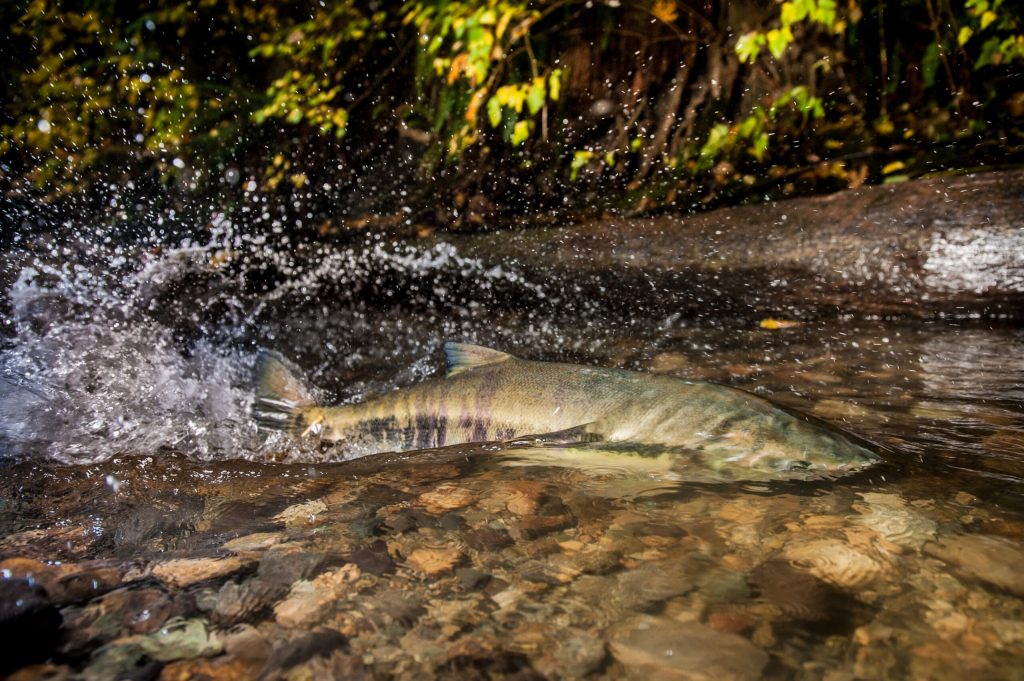
This article is about a new publication titled Taking care of knowledge, taking care of salmon: towards Indigenous data sovereignty in an era of climate change and cumulative effects, available open-access from Facets Journal. It is republished from The Conversation under a Creative Commons license. Read the original article. Image credit: Fernando Lessa. Sara Cannon,
-
Doing the Work to Unsettle Ecology: Responsibility & accountability for non-Indigenous ecologists
It was an honour and a pleasure to have been a part of this year’s National Center for Ecological Analysis and Synthesis (NCEAS) Annual Diversity, Equity, Inclusion and Justice Seminar Series! The talk I gave is below, and the references for the talk along with some additional resources are available on this google doc. You
-
New publication: Interactions between local disturbance and climate-driven heat stress on central Pacific coral reefs
The second chapter of my PhD research is now published in Marine Ecology Progress Series (not open-access, but if you don’t have access through an institution and would like a copy please send me an email and I’d be happy to share a copy!). Coral reefs are one of the most diverse ecosystems on our
-
New publication: Macroalgae exhibit diverse responses to human disturbances on coral reefs
I am thrilled to share this new open-access publication, out today in Global Change Biology! This research is based on a chapter of my PhD dissertation. It was a massive effort that brought together 44 individual authors from 39 different institutions, to create a dataset of genus-level macroalgal percent cover across the Indian and Pacific
-
Upcoming talk: Doing the work to unsettle ecology
I am excited to announce that I will be the second speaker in the 2023 National Center for Ecological Analysis and Synthesis (NCEAS) DEIJ seminar series. The talk will take place on Zoom on May 31 at noon Pacific and is open to the public. My talk, titled “Doing the work to unsettle ecology,” will
-
Announcing my new position at the Centre for Indigenous Fisheries at UBC
Hello everyone! I am excited to share with you that I have started a new position at the Centre for Indigenous Fisheries at the University of British Columbia! The Centre for Indigenous Fisheries (CIF) is an interdisciplinary research centre that works in collaboration with Indigenous communities to support the conservation, restoration, and management of fish
-
PhDone!
I’m delighted to share a major (and majorly overdue) update: in August, I successfully completed my PhD! My dissertation is publicly available online here.
-
New publication: Coral reefs in the Gilbert Islands of Kiribati after more than a decade of multiple stressors
I’m thrilled to share the first publication from my Ph.D. dissertation research, out last month in the open-access journal PLoS One (and available for download here). This paper will be the first chapter of my dissertation, and it’s great to (finally) see it out in the universe! For this paper, my co-authors (including my advisor
-
History doesn’t have to repeat itself: Looking back at the origins of biodiversity conservation shows that decolonization is necessary for just and effective steps forward
Last week, I spoke at my department’s weekly seminar about the need to situate conservation as a field within both local and historical contexts. My argument was that this context is integral for preventing conservation efforts from causing harm in the future; essentially, we need to learn from the past in order to find ways

Sara E. Cannon, PhD
Aquatic Conservation Scientist
 Sara E. Cannon, PhD