-
New publication: Climate change denial and the jeopardized interests of the United States in the Freely Associated States of Micronesia
I am excited to share my new publication, Climate change denial and the jeopardized interests of the United States in the Freely Associated States of Micronesia! The paper was published in the journal Asia Pacific Viewpoint just before the holidays and I am thrilled to be able to share it with you here. In the…
-
Decolonizing Conservation: A Reading List
The goal of the reading list is to help well-meaning non-Indigenous folks like myself educate ourselves on the colonial, white supremacist, and imperialist roots of biodiversity conservation around the world. Many of us work in places with long histories of occupation and colonialism, where the impacts of colonialism are still ongoing, and no matter how…
-
Hidden Indicators of Reef Health: New study suggests that common survey metrics may miss subtler signs of stress (cross-posted from Reefbites)
Some corals in the Gulf of Aqaba (also known as the Gulf of Eilat) in the Red Sea are spawning out of sync, says a new paper published in Science by scientists Tom Shlesinger and Yossi Loya from Tel-Aviv University.
-
New publication: The relationship between macroalgae taxa and human disturbance on central Pacific coral reefs
I am delighted to share my first first-authored peer reviewed journal article, The relationship between macroalgae taxa and human disturbance on central Pacific coral reefs, now out in Marine Pollution Bulletin!
-
How corals can help us make predictions about our future under climate change (cross-posted from ReefBites)
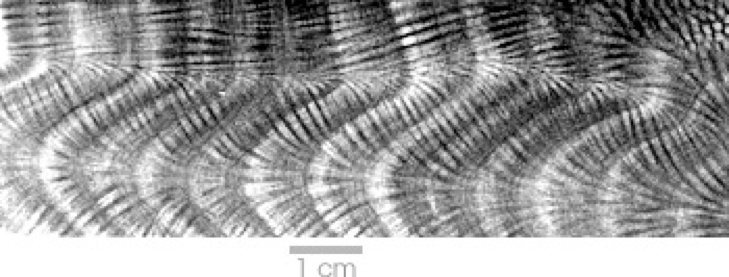
This blog post originally appeared on ReefBites, the student blog of the International Society for Reef Studies. Every two to seven years, the eastern equatorial Pacific climate oscillates between anomalously warm (El Niño) and cold (La Niña) conditions in a process known as the El Niño Southern Oscillation (ENSO). This process influences sea surface temperatures…
-
“We are not drowning, we are fighting”: Pacific Islanders want you to know that they still have hope for their islands
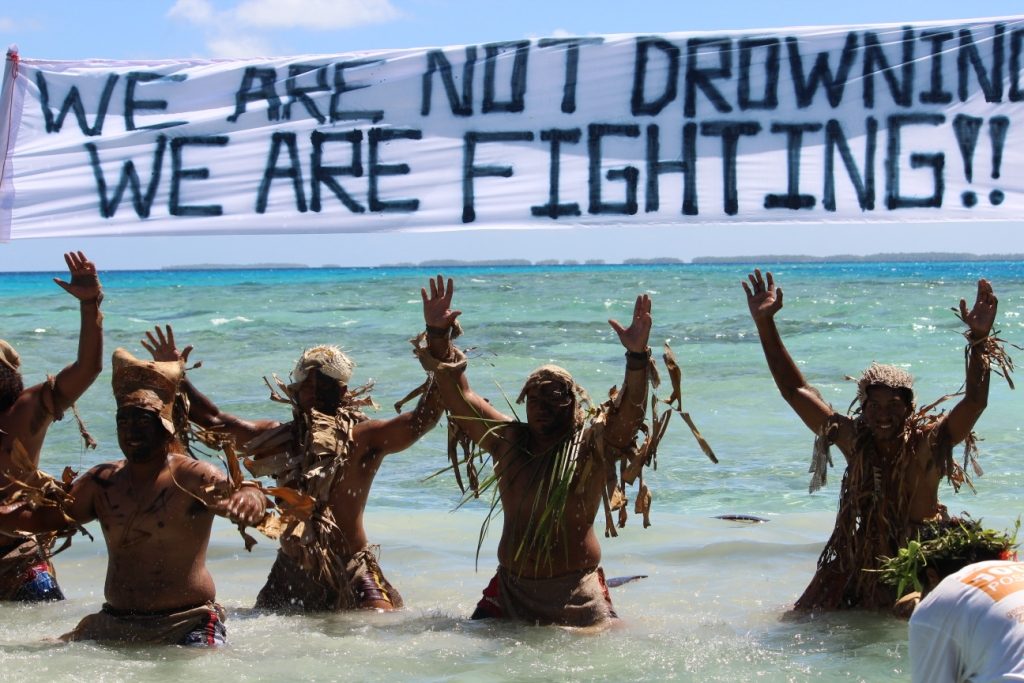
This blog post originally appeared on the Ocean Leaders blog, which highlights the work of Ocean Leaders fellows. Please consider giving them a follow on social media at @oceanleaders on Twitter or OceanLeadersUBC on Facebook! This past weekend, I was on a discussion panel for the documentary film Anote’s Ark, which follows the former present of…
-
Diversity in geoscience: Participation, behaviour, and the scientific division of labour at a Canadian geoscience conference
I’m taking a quick break from posting updates about fieldwork in Kiribati to announce that a study I co-authored has been published! Some colleagues and I attended the 2017 Canadian Geophysicists Union meeting in Vancouver with the goal of examining diversity through observations of participation, presentation content, and behaviour in conference sessions. We found that women…
-
Recent study of scientists and advocacy overlooks gender and racial biases
With the April 22 March for Science in Washington, DC quickly approaching and the current anti-scientific stance of the American government, the scientific community is abuzz with debate over what role scientists should play in activism. In the midst of these contentious times comes a new paper published in the journal Environmental Communication from George…
-
Interview: Scientific research and beauty mix on the Marshall Islands
Recently, I was invited to be a part of last weekend’s episode of the CBC radio show, Quirks and Quarks. The episode explored the ways that scientists spent their summers. It was my first recorded interview, and I was thrilled to be asked to participate. I was also extremely nervous. Fortunately both the producer, Mark Crawley, and the…
-
Dispatch from the 13th International Coral Reef Symposium
You might imagine a group of scientists coming together to discuss the current state of the world’s coral reefs would be a depressing affair, considering the myriad of challenges reefs are facing. You would be right, but only partially. There was a lot of gloom and doom at the 13th International Coral Reef Symposium – coral bleaching,…

Sara E. Cannon, PhD
Aquatic Conservation Scientist
 Sara E. Cannon, PhD